Feed on
Posts
Comments

Comfort and Joy

Oprima aqui para leer en espanol

Children in SpainThe essence of the holidays is the celebration of loving relationships, especially within the family. It is the time for children with their joy and enthusiasm and their sense of wonder. What fun it is to be with them as they open their presents with such gusto! It is not the gifts so much as the gathering that remains in our memories with the happiness it engenders.

There is an added dimension for the Christian, and that is the belief that God came to live with us – as a child. The image of Mary and Jesus has deep emotional meaning beyond any theological interpretation. Moreover, it is the same bond of family that saturates the eight days of Chanukah, or, for that matter, any family gathering where love is shared. For at least in my understanding, our ability to love is a gift from God.

I have had the privilege of getting to know many families as I have traveled the byways of Spain, and over the years I have written down some impressions of the heart of these unique group of people we call Spaniards. I would like to share with you a little of what I have written about them, for in my heart I believe their way of life is a model as to how we all can live during the holidays and then beyond, as we seek to fan the flame of family love in our hearts:

What is at the heart of Spain? It is being together as a family, and the special way in which they cherish their children. This begins with the experience of young childhood where the little boy or girl is showered with love within the family, and treasured by the neighborhood. There is no fear of ‘spoiling’ the child.

The heart of Spain is fostered by daily encounters of affection expressed within the family and neighborhood. From a childhood immersed in seemingly unconditional love, comes an eagerness to engage in personal interchange, and a willingness to maintain these personal relationships through frequent contact. When one begins life with this kind of affirmation, it becomes second nature to engage friend and stranger alike with a kind of personal intimacy.
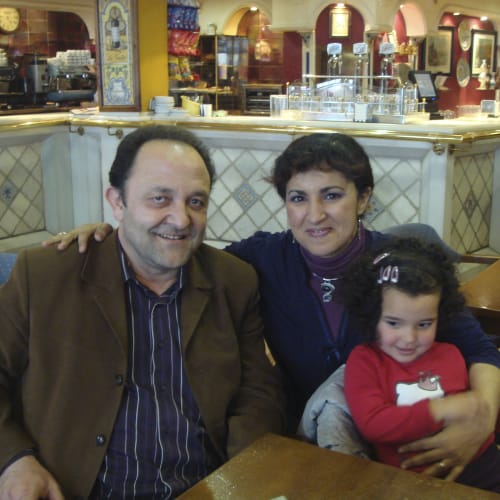
Spanish Family
The companionship of their family soon extends to all those whom they touch. Spaniards refer to people by their given name; in greeting they embrace even the stranger; they acknowledge fellow diners; they sit shoulder to shoulder in the bullring. It is an intimacy that comes from treating one another as sacred, as people of worth.

Needless to say, mine is an idealized image; we are all flawed human beings affected by the vicissitudes of life. That being said, it is this foundation of caring through the communal experience that endows Spaniards with a certain dignity and grace, and a willingness to engage the world with hospitality. Theirs is not a closed society where the value of privacy is elevated; it has always been a way of life that is warm and welcoming…

Uncles and aunts, cousins and grandparents are next-door neighbors. They see each other several times a week while shopping at the local market or at their favorite tapas bar. Members of the family often operate local shops, work together in the fields, or man the fishing boats. These kinds of relationships stand the test of time, and mature throughout the years of one’s life. Even today, this is the customary way of life throughout much of Spain.

There is nothing that can assure our spiritual well being more than a loving, caring human presence. We can never replace the experience of hospitality conveyed face to face – and why should we? It is this duende – a difficult to define Spanish phrase that connotes emotion and authenticity – that is the heart of Spain. It is also her gift to the world.

I think many of you would enjoy getting to know some of my friends I write about – Lola, Fermín, Carmen, Miguel and Jorge. They are churning cheese, harvesting saffron, blending sherry, aging hams, making homemade soups. You can meet them in the pages of my book, The Heart of Spain: Families and Food. It is not a commercial venture so much as a way to spread the word about such a warm and caring culture.

¡Que viva la familia Española!

Feliz Navidad,

Don

Consuelo y Alegría

Oprima aqui para leer en espanol

ChildrenLa esencia de estas fiestas es la celebración del cariño especialmente de la familia. Es tiempo para los niños y de disfrutar de su entusiasmo y capacidad para maravillarse. ¡Qué divertido es estar con ellos mientras abren con tanta ilusión sus regalos! No son tanto esos regalos como los momentos compartidos los que permanecen en nuestra memoria con la felicidad que ellos conllevan.

Existe una dimensión añadida para el cristiano, y ésta es la convicción de que Dios vino a vivir entre nosotros — como niño. La imagen de María y Jesús contiene un significado profundamente emotivo más allá de las interpretaciones teológicas. Lo que es más, se trata del mismo vínculo familiar que llena los ocho días de Hanukah, o cualquier reunión familiar en la que el amor es compartido. Al menos en mi opinión, nuestra capacidad de amar es un don de Dios.

He tenido el privilegio de conocer a muchas familias en mi recorrer por los caminos de España, y a lo largo de los años, he ido plasmando algunas de mis impresiones sobre los corazones de este pueblo al que llamamos españoles. Me gustaría compartir con Uds. parte de lo que he escrito sobre ellos, porque estoy convencido de corazón de que su forma de vida nos enseña a los que buscamos alimentar la llama del amor familiar en nuestro corazón cómo vivir las fiestas y otras ocasiones.

“¿Qué hay en el corazón de España? La reunión familiar y la forma tan especial que tienen de amar a sus niños. Desde la más tierna infancia, los pequeños reciben grandes muestras de cariño de toda la familia y de sus conocidos. No se teme ‘malcriar’ a los niños.

El corazón de España se alimenta de afectuosos encuentros cotidianos con la familia y los amigos. De un una niñez empapada de amor incondicional surge la avidez por establecer relaciones entre las personas y el deseo de mantener estas relaciones a través del contacto cotidiano. Cuando uno nace con este tipo de afirmación, se convierte en algo natural establecer una relación personal con amigos tanto como con extraños.
Spanish Family
La lealtad a familiares acaba pronto extendiéndose a todos con los que mantienen contacto. Los españoles se refieren a otras personas por su nombre de pila; al saludarse se abrazan incluso con extraños; cenan juntos; se sientan hombro con hombro en la plaza de toros. Es la confianza que proviene de la consideración por el otro, de la valoración del prójimo.

Huelga decir que la mía es una imagen idealizada; todos somos seres imperfectos afectados por las vicisitudes de la vida. Una vez dicho esto, son estos cimientos de cariño a través de una experiencia en común los que dotan a los españoles de una cierta dignidad y gracia y del deseo de ofrecer su hospitalidad al resto del mundo. La suya no es una sociedad cerrada en la que el valor de la privacidad es elevado; siempre ha sido una forma de vida cálida y acogedora…

Tíos y tías, primos, primas, abuelos y vecinos… se ven varias veces semanalmente comprando en el mercado o tomando unas tapas en el bar de la esquina. Las familias a menudo regentan negocios, trabajan juntas en el campo o conforman la tripulación de un pesquero.
Estas relaciones resisten el paso del tiempo y maduran a través de los años. Incluso hoy en día, ésta es la forma de vida acostumbrada en muchos lugares de España.

No hay nada que pueda garantizar más nuestra paz espiritual que la presencia del amor y el calor humano. Nunca podremos reemplazar las vivencias en primera persona de hospitalidad- ¿y por qué deberíamos reemplazarlas? Es este duende—expresión española tan difícil de definir que lleva connotaciones de emoción y autenticidad—ése es el corazón de España y también su regalo al mundo.”

Creo que muchos de Uds. disfrutarían al conocer a algunos de los amigos de los que hablo — Lola, Fermín, Carmen, Miguel y Jorge. Ellos elaboran queso, recolectan azafrán, crian vino de Jerez, curan jamón, hacen sopas caseras. Pueden conocerlos entre las páginas de mi libro The Heart of Spain: Families and Food. No se trata tanto de una aventura comercial como de una manera de transmitir su cálida y amable cultura.

¡Qué viva la familia española!

Feliz Navidad,

Don

Food and Hospitality

Oprima aqui para leer en espanol

At the Market
If you ever get to visit the fascinating port of Cádiz that guards the Atlantic approach to the Mediterranean in Southern Andalucía, the first place to go is an astonishing public market, which features rows upon rows of fresh catches from the Atlantic Ocean.  You will see burly fishermen slicing enormous steaks of swordfish; other fishing families have artistically arranged their merluza so that the slender fish bare their needle sharp teeth while biting their own tails! The last time we were there, a young fisherman was entertaining passersby with lilting songs from the sea as he sliced fillets of tuna!

Get there early, as the people in the market start winding up things at about noon.  It is a memorable experience which will never be suggested in any travel book – even the beautiful town of Cádiz, on a peninsula surrounded by beaches, is hardly ever mentioned because it is a little off of the beaten path of tourism. There is an underground garage along the beach close to the cathedral, which is the perfect place to park your car, as the market is only a few yards walk through ancient cobblestone alleys.

Ruth, I and our boys lived in the neighboring port town called El Puerto de Santa Maria in the early 1970s, where I have fond memories of visiting our local municipal market every Saturday morning – hardly the scale of the Cádiz market, but equally friendly.  I enjoyed interacting with our honest neighbors who were standing in their stalls every day to offer us the best they could find.  I would see amazing freshly picked green vegetables right out of the garden; lots of local berries and fruit; wheels of local cheese; slabs of fresh locally sourced meat; and an astonishing display of the fruit of the sea – whether it be fish that swam in the ocean last night, or an array of shellfish and other sea creatures — many of which were still alive!
Market Scene
To this day, I remember the cheerful face of a woman whom I called the ‘spinach lady’ because her stall was always piled high with the most elaborate greens in town. Not far from her were amazing fruit stalls where the owners spent a long time each day meticulously building symmetrical pyramids of blood oranges and Clementinas.  One of my favorite scenes to watch was a farm lady who kept retrieving tiny snails who were wisely crawling away to freedom from her bowl.

One of those Saturdays I forgot my wallet.  I was embarrassed when I realized there was nothing in my pocket to pay the fisherman for a beautiful swordfish steak he had just carved for me.  He immediately sensed my distress and said, “Take the swordfish with you.  You can pay me when you return to the market some other day. By the way,” he continued as he reached in his pocket for a 1,000 peseta bill, “take this money so you can finish your shopping!”

Amazed at his generosity and trust, I finished my shopping errands without having to return home empty handed.  My trip included an obligatory stop at the churro lady’s stand, where she served me sizzling hot churros in a newspaper cone for 50 pesetas.
Seafood Vendor
Of course, I am describing the joys of what we now call a farmers market in America, where the produce and meat we buy are from the real human beings whom we get to meet and know. We begin to appreciate the cycle of the seasons, as well as the crops and the farmers.  It is the natural way of preparing for meals, and that is the secret to the food we enjoy in Spain.  There we enjoy simplicity of flavors, fresh seasonal vegetables and fruits, and a reliance on generations old recipes, which conform to the seasonal cycle.

We have one time a year in America when we pause from our usual buying habits of packaged food from far away places, and follow the same seasonal approach as they do in Spain. That is on Thanksgiving Day, our traditional harvest meal.  The dinner has a special meaning in American folklore because it marks the time when the first grateful settlers gathered around a common table with some of their native neighbors, and thanked God for the harvest that saved them from famine.

Our traditional American menu that day is straightforward, in many ways following the simple, honest traditional cooking in Spain that lets the ingredients shine. The centerpiece is a large turkey, simply cooked and served, much as lamb or suckling pig is presented in Spain. The golden roasted turkey is surrounded with local squashes and potatoes.  In areas that are more rural, side dishes of pickles and preserves made in the kitchen earlier in the year may also be served. Cranberry sauce, made with cranberries grown on Cape Cod by the Pilgrims, is a standard garnish. Finally, we top off the meal with another American treat: pumpkin or apple pie. Every one of the ingredients on the table is available in the fall, harvest time, and is served in a straightforward manner, showcasing its natural flavors.
The Market
Our American Thanksgiving meal, with its focus on community, family and honest seasonal foods, reminds me of many meals that we enjoyed in Spain that featured local products and hospitable company gathered around a table.  It is a way of hospitality that extends to all social interactions, not only one ceremonial time of the year.

Sometimes when Ruth and I go to Spain, our neighbors here in Williamsburg will ask whether our trip is for business or pleasure, but that is an unanswerable question because it is not appropriate to categorize hospitality. For example, I have known one man for over ten years.  Our initial contact was at a trade fair where his company was seeking to export Jamón Ibérico.  Now, every time Ruth and I, or our sons, pass through Córdoba on our various trips, he will take us out to dinner with his wife and three boys. We will enjoy meats and vegetables from the local countryside with a businessman who welcomes us as if we are family.

The Spanish culture revolves around the community rather than the individual.  It is all about gathering around a table together and enjoying each other’s company, whether is for café con leche or a big paella.  The catalyst for this vital interchange is honest food – amazingly fresh, simply prepared.  In some ways, they try to capture the essential spirit of Thanksgiving Day every day of the year.

May you and your loved ones enjoy a loving Thanksgiving Day together, celebrating the hospitality of your family and friends.

Su amigo,

Don

Oprima aqui para leer en espanol

At The Market
Si alguna vez tienen la oportunidad de visitar la fascinante ciudad de Cádiz, puerto vigía en la confluencia del Océano Atlántico y el Mar Mediterráneo en el sur de Andalucía, mi primera recomendación es que visiten su impresionante mercado municipal. En él se extienden, hilera tras hilera, puestos de pescado fresco del Atlántico. Verán corpulentos pescadores rebanando ejemplares de pez espada; otras familias de pescadores disponiendo con esmerado arte su merluza para que exhiba los afilados dientes de aguja mientras se muerda la cola. La última vez que estuvimos allí, ¡un joven pescador entretenía a los viandantes con canciones marineras mientras fileteaba un atún!

Visítenlo temprano en la mañana, ya que los pescaderos comienzan a recoger sus puestos sobre las doce del mediodía. Es una experiencia memorable que nunca aparecerá como sugerencia en un libro de viajes – es más, Cádiz, bella península rodeada de playas, apenas si es mencionada en las guías puesto que se halla un poco apartada de las rutas turísticas. Paralelo a la playa y cercano a la catedral, hay un aparcamiento subterráneo: el lugar perfecto para aparcar el automóvil y caminar hasta el vecino mercado, a sólo unos metros de distancia a través de callejuelas empedradas.

Ruth, mis hijos y yo vivimos en la vecina localidad de El Puerto de Santa María a principios de los años setenta, lugar del que guardo entrañables recuerdos. Solíamos frecuentar el mercado municipal los sábados por la mañana, que aunque no del tamaño del de Cádiz, resultaba, sin embargo, igualmente cordial. Yo disfrutaba mezclándome entre nuestros leales vecinos que nos despachaban ofreciéndonos día a día la mejor calidad. Ante a mis ojos se desplegaba gran variedad de las más frescas verduras, bayas y frutas recién cortadas, ruedas de queso de la zona, carne fresca de los alrededores, y una increíble selección de pescado extraído sólo unas horas antes y de variedad de mariscos, moluscos y otras criaturas marinas- ¡muchas de las cuales seguían vivas!
Market Scene
Continúa viva en mi memoria la alegre mirada de aquella mujer a la que nos referíamos como “la señora de las espinacas” porque su puesto rebosaba de las verduras más diversas de El Puerto. No mucho más allá sorprendían las fruterías en las que en esmeradas pirámides simétricas se exponían naranjas de sangre y clementinas. Una de mis escenas favoritas era la de la campesina que pacientemente devolvía una y otra vez a su cuenco los caracoles que sabiamente se deslizaban hacia la libertad.

Uno de aquellos sábados dejé mi cartera olvidada en casa. Me sentí avergonzado al comprobar que no tenía con qué pagar el hermoso filete de pez espada que el pescadero acababa de cortarme. Inmediatamente se percató de mi malestar y me dijo:
-“Llévese el pescado. Ya me pagará cuando vuelva otro día. A propósito”- continuó mientras sacaba de su bolsillo un billete de 1.000 pesetas- “tome dinero para comprar lo que le haga falta hoy.”
Seafood Vendor
Sorprendido por su generosidad y confianza terminé de hacer mis compras sin tener que regresar a casa con las manos vacías. Mi rutina incluía una parada obligatoria en el puesto donde la churrera me ofrecía un cucurucho de humeantes churros por 50 pesetas.

Sin duda lo que describo se asemeja a lo que hoy conocemos en América como mercados de granja, en los que compramos carne y otros productos a personas con las que llegamos a entablar una cordial relación. Aprendemos a apreciar el ciclo de las estaciones y los cultivos, así como a valorar a los granjeros. Es la forma más natural de preparar una comida, y ése es el secreto de la cocina que disfrutamos en España. Allí disfrutamos de la simplicidad de los sabores de las verduras y frutas frescas de la temporada y de la confianza que nos ofrece el ciclo de las estaciones.

En América tenemos una ocasión al año en la que hacemos una pausa en nuestros hábitos de compra de comida empaquetada y procedente de lugares lejanos, para seguir la tendencia de consumo de productos de temporada, tal como lo hacen en España. Se trata del día de Acción de Gracias, nuestra tradicional comida después de la cosecha. Este almuerzo posee especial significado dentro de la tradición americana puesto que marca el momento en el que, agradecidos, los primeros colonos se reunieron en torno a una mesa junto con sus vecinos nativos americanos para dar gracias a Dios por la cosecha que les libró de una hambruna.
The Market
El menú tradicional americano para este señalado día no es nada complicado, y en muchos aspectos sigue la línea de simplicidad de la cocina tradicional española que otorga relevancia a los ingredientes. El plato central es un gran pavo, cocinado de manera sencilla y servido de forma muy similar al cordero o cochinillo en España. El pavo, asado hasta dorarse, se rodea de calabaza, calabacines y patatas. En las zonas más rurales, se acompaña con pepinillos y otras conservas preparadas en la cocina meses antes. La salsa de arándanos, originariamente elaborada en Cape Cod por los colonos, es una guarnición muy común. Por último, coronamos la comida con otro exquisito plato americano: el pastel de calabaza o manzana. Cada uno de los ingredientes de este almuerzo está disponible en otoño, tiempo de cosecha, y se sirve de manera sencilla, respetando los sabores naturales.

Nuestro almuerzo de Acción de Gracias centrado en la comunidad, familia y alimentos del tiempo, me trae recuerdos de muchas otras comidas disfrutadas en España en agradable compañía alrededor de la mesa y en las que el plato principal se componía de productos de la zona. Para ellos la hospitalidad se extiende a todas las relaciones sociales. La comida no es únicamente una ceremoniosa ocasión al año.

A veces cuando Ruth y yo vamos a España, nuestros vecinos en Williamsburg nos preguntan si se trata de un viaje de negocios o de placer, pero para nosotros se trata de una pregunta sin respuesta puesto que no es posible categorizar la hospitalidad. Por ejemplo, hace ya más de diez años conocí a un hombre. Nuestro primer contacto fue en una feria comercial en la que su empresa buscaba exportar jamón ibérico. Ahora, cada vez que Ruth y yo o uno de nuestros hijos pasa por Córdoba en alguno de nuestros viajes, nos lleva a cenar con su esposa y sus tres hijos. Damos buena cuenta de carnes y verduras de la zona, disfrutamos junto a un hombre de negocios que nos acoge como si fuéramos de la familia.

La cultura española gira en torno a la comunidad más que al individuo. Se trata de reunirse alrededor de la mesa y disfrutar de la compañía mutua, bien para tomar un café con leche bien para degustar una gran paella. Los catalizadores de este intercambio vital son los alimentos genuinos-increíblemente frescos y preparados de una manera sencilla. De alguna forma, los españoles intentan capturar el espíritu en esencia del día de Acción de Gracias todos los días del año. Que Uds. y los suyos disfruten de un hogareño día de Acción de Gracias juntos, celebrando la hospitalidad de sus familiares y amigos.

Su amigo,

Don

A Porcine Paradise

Oprima aqui para leer en espanol

Jamon at the Market
Pork and ham are the foundation of Spain’s cuisine, and in many ways its culture. Visit any supermarket (worth its snout) and you will see dozens of jamones hanging from the rafters – and that means hoof and all. Anywhere you visit in this large country, whether it be in the mountains, on the high plains, or along the ocean, you will encounter the iconic ham of Spain. When I was a young man in the Navy with a small family living on a tight budget, I didn’t pay too much attention to the ham. But what a shame it was to be living in the heart of Spain oblivious of the food that is her essence.

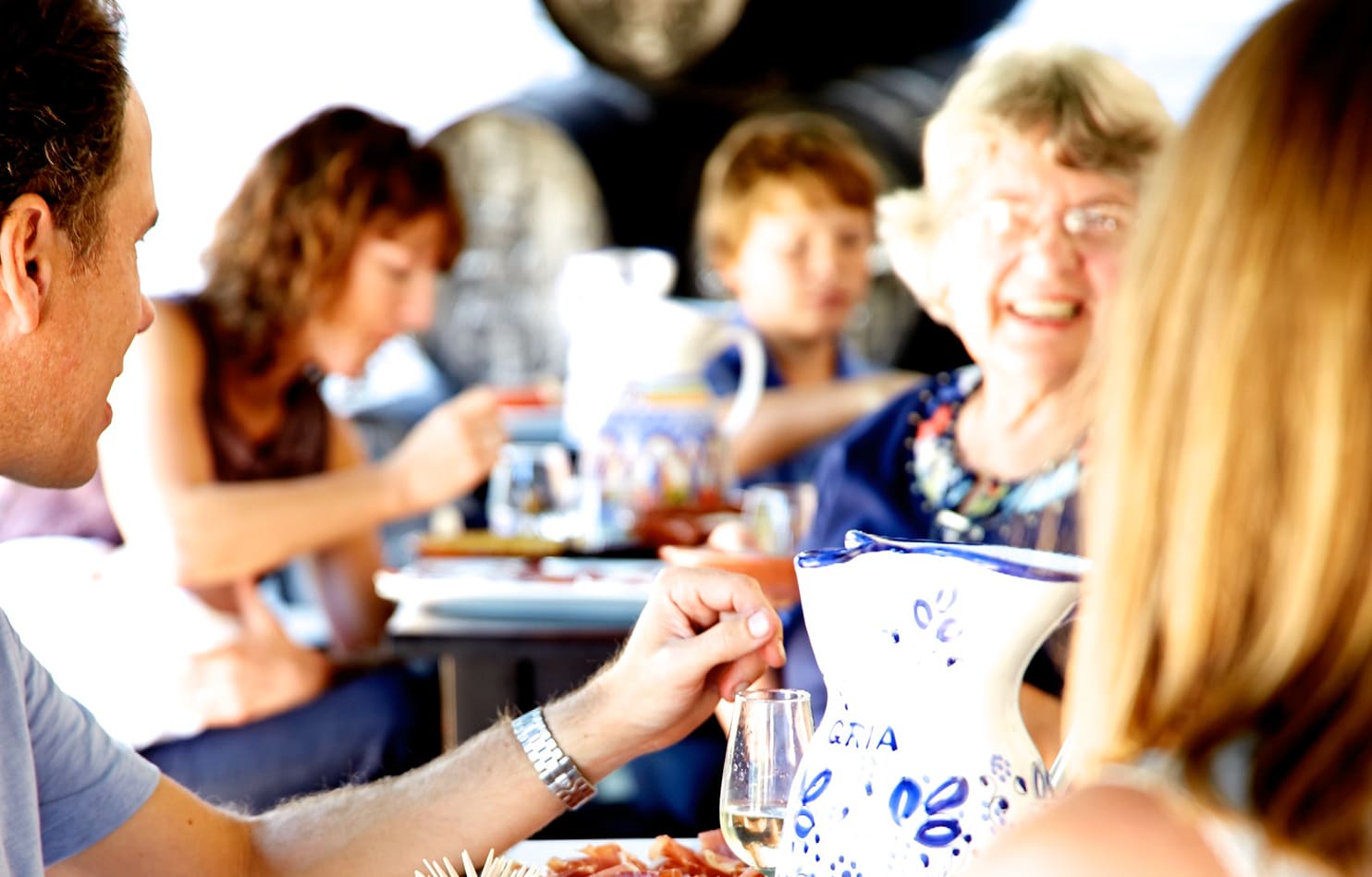
Especially during the holidays, most households, whether wealthy or humble, will have a jamón on a stand prominently placed on the counter as a sign of hospitality. It is presented in a special wooden stand, with a very long, thin super sharp knife next to it – ready for any friend or family member to slice off a few thin slivers, to be eaten with cheese on a sandwich or with one of many tapas – or just by itself. It will take a few weeks for the whole leg of jamón, weighing 14 or 15 pounds, to be consumed.

It is an art to slice the ham paper thin, but it is a skill well worth learning. My grandson, named Sam, lived in Cádiz with his family for six months. Before long, he had mastered the craft although he was just 9 years old! He would proudly serve a plateful of the thin slices arranged like petals of a daisy as the rest of us were sitting on the patio enjoying the day with a glass of sherry in hand.

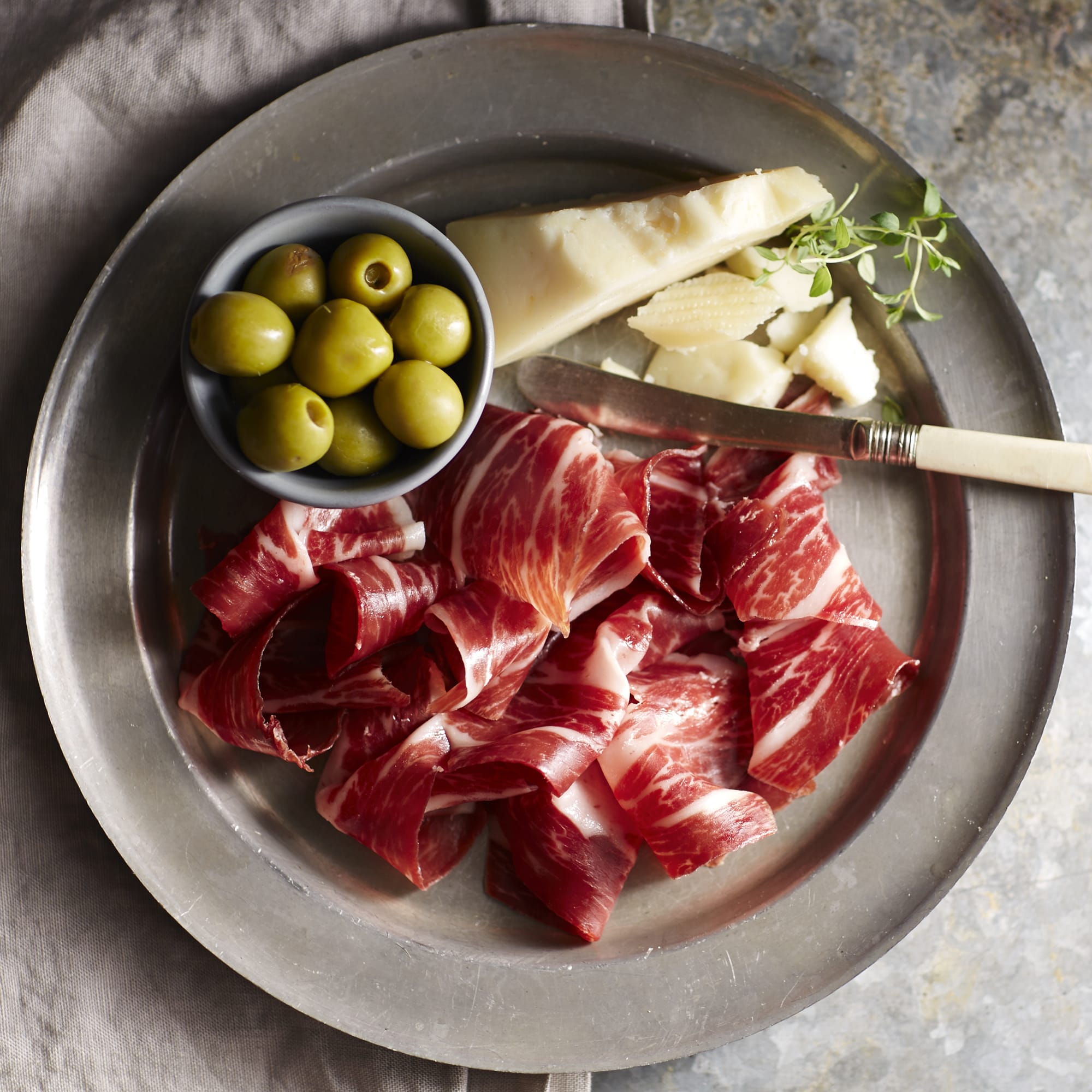
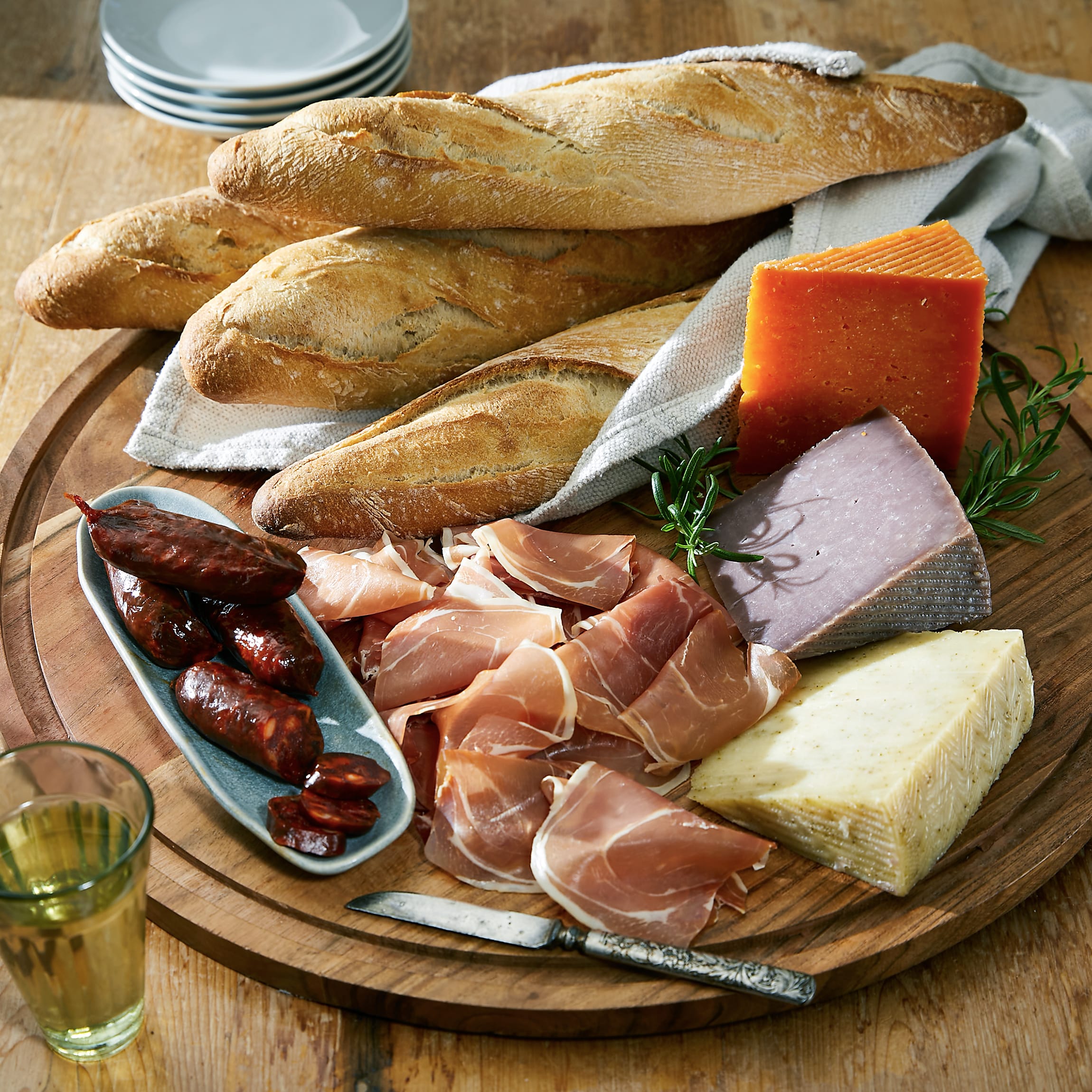
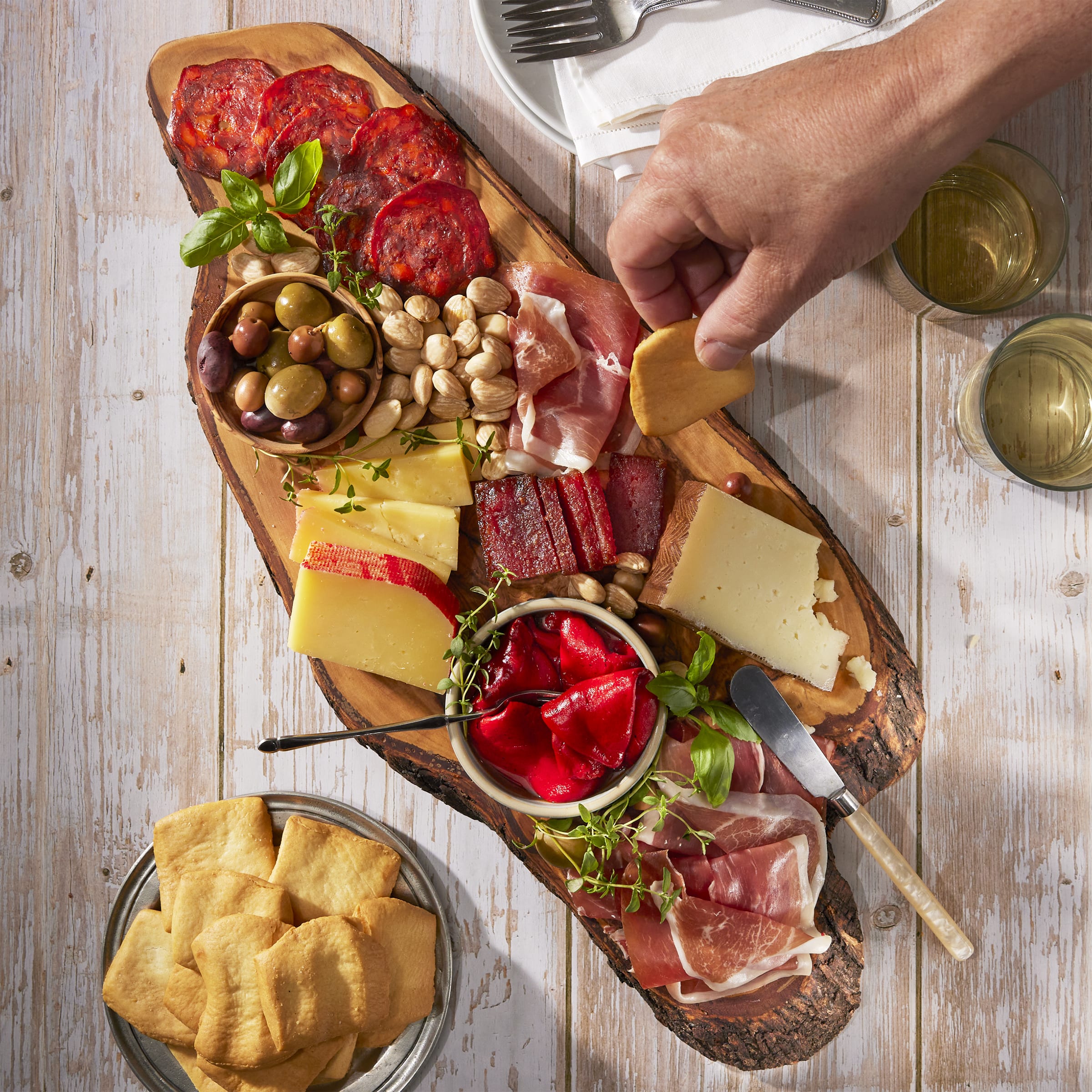
However, it is not just during the holidays that you will encounter ham and pork – it is all year-round. You will see tasty chunks of ham in your cocido or country stew, garlic soup, and sometimes in the tortilla Española potato omelet you are served – not to mention the sausages and chorizos unique to hundreds of villages and towns. You will find it as a tapa accompanying Manchego cheese and cracked olives, or served with seafood – the other staple of Spain.

Iberico Pig
Even among the remains of the cavemen of Altamira, the earliest settlers of Spain, archaeologists have found the bones of pigs, indicating that they were a source of food. The people of Spain consume more pork and ham per capita than any other people on the face of the earth. There are two reasons for this: first, the pig provides an extraordinary amount of nourishment with virtually no waste – it is a very efficient source of food, which has been used for millennia across the world.

The second is a historical reason. As most of you realize, the Christian Spaniards embarked on a 700 year-long struggle to reclaim their homeland from the invaders from Africa and the Middle East, chafing within a society dominated by Islam. They termed this counter-insurgence the Reconquista, or the Reconquest. An easy and certain way to distinguish themselves from their foes, the Muslims, was to make pork central to their diet. So for practical and cultural reasons, ham and pork became foundational.

As the knights reclaimed many villages and towns, they would entrust the reclaimed land to the local Christians, as a sort of grant, thereby assuring the territory would remain in friendly hands. In exchange for their loyalty the local people gained pastures and woodlands to husband. It was not the severe vassalage system of Europe across the Pyrenees. Some of the land was used to raise crops and some to graze sheep and pigs. In fact, much of the choice pastureland and forests of the dehesa, where the prized Ibérico pigs flourish, was originally designated for that purpose centuries ago.

The native pig of the Iberian Peninsula is called the cerdo Ibérico and it has roamed the Peninsula for hundreds and hundreds of years. In earlier times, it was viewed as nothing special; it was just the normal Spanish pig. In more recent times, after the horrendous years of deprivation caused by the Civil War and World War II and its aftermath, Spaniards began to distinguish some of the hams from others by brand names such as Cinco Jotas, Pata Negra and Joselito. On the other hand, they might identify the jamón by the location where it was cured, such as the hams of the former Moorish fortress of Teruel, or the mile high village of Trevélez in the snowcapped Sierra Nevadas of Granada.

About 30 years ago, there was a recognition by the government and producers that there should be a way to distinguish one ham from another – the kind of pig it came from and how long it was cured.

As you can see, if you have any knowledge of the production of American ham and pork, what we are describing in Spain is almost another type of meat. That is why I prefer to call American ham ‘ham,’ and Spanish ham ‘jamón,’ as an easy way to avoid confusion. When we think of a Christmas or Easter ham in North America, we probably think of thick slices of juicy meat, which has been roasted for several hours with cloves, and then perhaps glazed with brown sugar and pineapple! Moreover, when we think of a ham sandwich we usually go to the deli counter and have them thinly slice pieces from a giant roll of cooked ham. We put those between slices of white toast or rye bread spread with a little mayonnaise and perhaps spicy mustard — and there you have it.

Market
Besides, if you know a little more about the production of ham in the U.S., you know that it is made moist by pumping it with water. We certainly would never dream of buying or serving it with the hoof on – heaven forbid!

I would like to guide you through the different variations of Spanish jamón and pork – in the most general sort of way. For more detail, I encourage you to visit jamon.com, our website dedicated to all things ham.

First, there are essentially two types of ham and pork available. One comes from the familiar white or pink pig, which is raised all over Europe and the U.S. In Spain, it becomes jamón Serrano, a dry-cured country ham, somewhat like Italian prosciutto, and unlike American country ham, in that it is neither smoked nor heavily salted.

The other kind, as I mentioned before, is the Ibérico. It comes from an ancient breed quite distinct from the pigs with which you and I are familiar. The sows bear small litters and the young pigs are raised for about two years before being slaughtered. The most highly prized pork comes from Ibérico pigs that feast on acorns from holm oak and cork trees (such as the kind that Ferdinand the Bull used to lounge under). The hams are hung to cure for up to four years, with the consequential loss of perhaps 40% of their weight. The result is a finely marbled ham called Jamón Ibérico de Bellota, which is 60% monounsaturated fat like olive oil: a sliver of which melts in your mouth at 70°F.

This is the Beluga caviar of hams, highly prized, and cured only in one part of Spain from a limited number of pigs. The exquisite flavor, the rarity of the animal, the many years it takes to breed in a free-range situation and the long curing time all contribute to its elite status in the ham world. Remember, this ham is enjoyed over a period of weeks – it is not that roasted glazed ham that you polish off in one Christmas meal!

At the Market
Over the last few years the prime cuts of Ibérico, which used to be used exclusively for sausage making, have become popular as fresh cooked premium pork. The cuts have unusual names, but are all delicious: presa (shoulder steak), solomillo (tenderloin steak), secreto (skirt steak) and pluma (end loin). The pork is spectacularly different from the ‘other white meat’ marketed in the United States. With its dark color, it resembles a succulent filet mignon beefsteak.

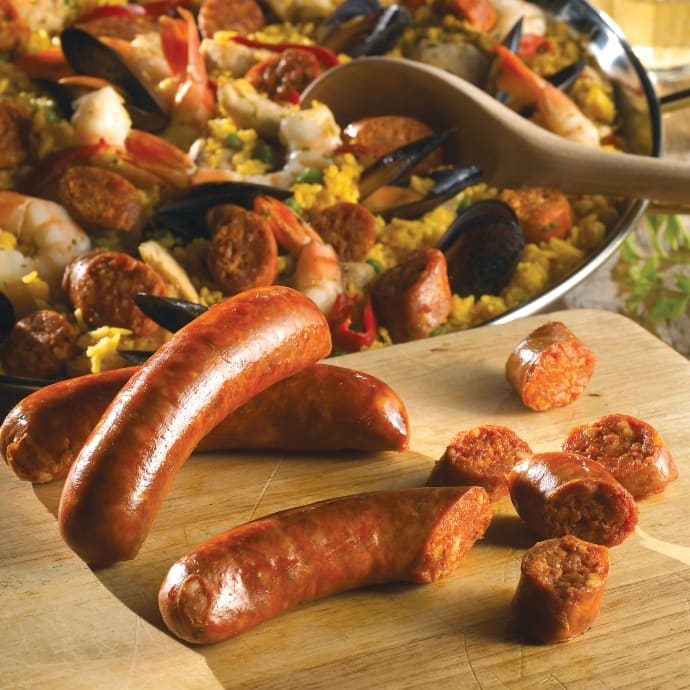
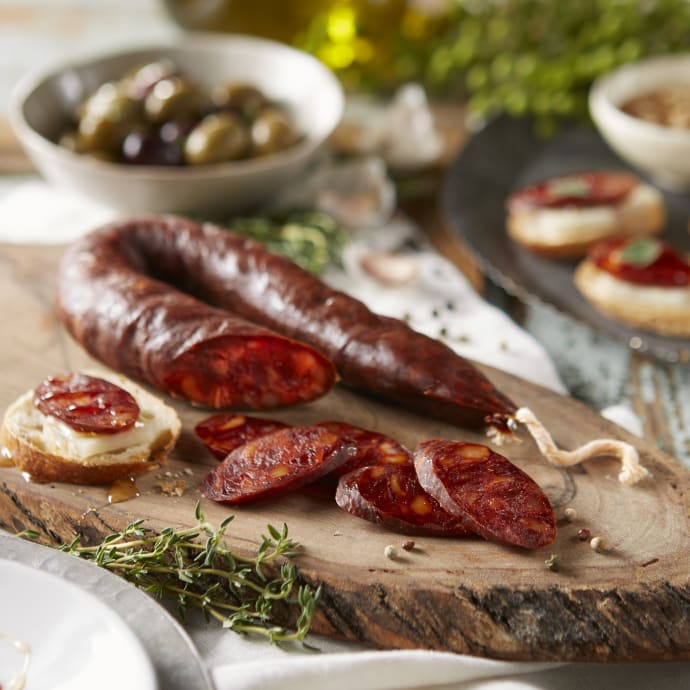
There is also a world of delicious sausages made from Serrano and Ibérico pork, ranging in price from a few dollars for a typical chorizo to over a hundred dollars for the finest lomo Ibérico. Chorizo, lomo (pork loin), salchichón, sobrasada, fuet, butifarra, cular, longaniza – the list of great sausages from different parts of Spain speaks to the ubiquity of Spanish cured pork.

In Spain, the most popular cured sausage is called chorizo, kind of like pepperoni but seasoned with pungent pimentón smoked paprika. Salchichón, cured with black peppercorns, is somewhat similar to Italian salami. To continue the Italian parallels (which are only approximate), jamón Serrano is like prosciutto de Parma.

Spain’s history, tradition and geography are all intertwined with its iconic cured meats. To learn more, especially about jamón, please visit our sister website, jamon.com. I hope that any of you who have not yet tasted Spain’s ham and sausages will take the opportunity to enjoy this central part of her cuisine.

Su amigo,

Don

Jamon at the Market
El cerdo y el jamón son la base de la cocina española, y en muchos aspectos de su cultura. Entren en cualquier supermercado español que se precie y encontrarán docenas de jamones colgados de las barras expositoras, con pezuña y todo. A cualquier parte del país que vayan, ya sea la montaña, la meseta o la costa, se toparán con el característico jamón español. Cuando yo era joven y estaba enrolado en la Armada, ya contaba con una pequeña familia que trataba de ajustarse a un escueto presupuesto y no le prestaba mucha atención al jamón. Pero qué lástima, estar viviendo en el corazón de España ajeno al plato que es esencia culinaria española.

Especialmente durante las fiestas, la mayoría de los hogares, ya sean acomodados o humildes, exhibirán sobre la mesa un jamón en su jamonero como seña de hospitalidad. El jamón se ajusta a un soporte especial hecho en madera que va acompañado de un larguísimo, delgado y afilado cuchillo y allí se ofrece para ser cortado en finas lonchas a cualquier amigo o familiar. Puede comerse con queso en un bocadillo o con algunas tapas, o también degustarse solo. Consumir la pata de jamón de unos 6 ó 7 Kgs. llevará unas cuantas semanas.

Resulta todo un arte cortar el jamón en lonchas finas como el papel, pero merece la pena aprender a hacerlo. Mi nieto, que se llama Sam, vivió en Cádiz con su familia durante seis meses. No pasó mucho tiempo antes de que adquiriera esta destreza aunque ¡sólo contaba con nueve años de edad! Orgulloso nos servía el plato lleno de finas lonchas dispuestas como si de pétalos de margarita se tratara mientras los demás en el jardín disfrutábamos del sol con una copa de jerez en la mano.

No obstante, el jamón y el cerdo no son platos exclusivos para las festividades, es un plato para degustar todo el año. Los cocidos y guisos caseros incluyen deliciosos trozos de jamón, también las sopas de ajo y a veces la tortilla de patata española, y no hablemos ya de las tradicionales morcillas y chorizos típicos de cientos de aldeas y pueblos cada cual con sus particularidades en la elaboración. Se sirven como tapas acompañados de queso manchego y olivas partidas o junto con mariscos- la otra base culinaria española.
Iberico Pig
Incluso entre los restos de los cavernícolas de Altamira, los primeros pobladores de España, han llegado a encontrar los arqueólogos huesos de cerdo, indicativo de que este animal ya representaba una fuente de alimentación. Los españoles consumen más cerdo y jamón per cápita que ningún otro país del mundo. Existen dos razones para este hecho: primero, el cerdo proporciona una extraordinaria cantidad de alimento y prácticamente ningún despojo-es una fuente de alimento muy provechosa a la que se lleva recurriendo desde hace milenios por todo el mundo.

La segunda es una razón histórica. Como muchos de ustedes sabrán, los cristianos españoles se lanzaron a una lucha de 700 años para reclamar su patria a los invasores africanos y del Próximo Oriente, enfrentándose a una sociedad dominada por el Islam. Denominaron a este movimiento contra-insurgente la Reconquista. Una manera sencilla y clara de distinguirse de los enemigos, los musulmanes, era hacer del cerdo parte principal de su dieta. De este modo por razones tanto prácticas como culturales, el jamón y el cerdo se convirtieron en fundamento de su alimentación.

A la vez que los caballeros rescataban multitud de aldeas y ciudades, confiaban las tierras a los cristianos de la zona, a manera de merced, y asegurándose así que el territorio permaneciera en manos amigas. A cambio de su lealtad, los paisanos obtenían tierras de pastos y bosques de las que cuidar y obtener beneficios. No se trataba del severo sistema de vasallaje de la Europa al otro lado de los Pirineos. Parte de la tierra se utilizaba para cultivar y parte como pastizales para ovejas y cerdos. De hecho, muchos de los escogidos pastos y bosques de la dehesa en donde los preciados cerdos ibéricos se crían, fueron designados originariamente con ese propósito hace ya siglos.

El cerdo originario de la península Ibérica se llama cerdo ibérico que habita la península hace cientos y cientos de años. En principio no se tenía por algo muy especial; sólo era el cerdo español habitual. Ya más recientemente, tras horrendos años de privaciones causadas por la Guerra Civil y la Segunda Guerra Mundial (1936-1945) y sus secuelas, los españoles comenzaron a distinguir unos jamones de otros por sus marcas comerciales como Cinco Jotas, Pata Negra o Joselito. Por otro lado, podían identificar el jamón según el lugar en que hubiese sido curado, como los jamones del antiguo alcázar de Teruel o Trevélez, pueblo en las altas montañas de la Sierra Nevada en Granada.

Hace alrededor de unos treinta años se reconoció por parte tanto del estado como de los productores la necesidad de distinguir un jamón de otro- la raza de cerdo del que provenía y el periodo de curación: doce, dieciocho meses o tres años.

Como pueden ver, si tienen conocimientos sobre la producción del cerdo y el jamón americano ‘ham’, lo que describimos en España es prácticamente otra clase de carne. Es por ello que prefiero llamar ‘ham’ al jamón americano y ‘jamón’ al español como una sencilla manera de evitar confusiones. Cuando en Norte-América pensamos en un jamón ‘ham’ de Navidad o Pascua, ¡probablemente pensaremos en gruesas rodajas de suculenta carne asada con clavo durante unas cuantas horas y glaseada con azúcar moreno y piña! Lo que es más, cuando nos decidimos por un bocadillo de jamón ‘ham’, vamos a la charcutería y les pedimos que nos corten lonchas de un rollo enorme de carne de cerdo asado. Las ponemos entre dos tostadas de pan blanco o de cereales con mayonesa y mostaza picante y ¡listo!
Market
Si, además, saben algo más de la producción de jamón ‘ham’ en Estados Unidos, sabrán que la jugosidad de la carne se obtiene inyectándole agua. ¡Nunca en la vida se nos ocurriría comprarlo o servirlo con la pezuña! ¡Dios nos libre!

Me gustaría orientarles sobre las diferentes variedades de jamón y cerdo español- de una manera general. Para más detalle, les animo a que visiten jamon.com, nuestro portal dedicado en exclusiva al jamón.

En primer lugar existen dos tipos de cerdo y jamón. Uno es el típico cerdo blanco o rosado, que se cría en toda Europa y Estados Unidos. En España este tipo produce el jamón Serrano, un jamón seco y curado, parecido al prosciutto italiano que, en oposición al americano, no está ni ahumado ni excesivamente salado.

El otro tipo, que ya mencioné anteriormente, es el Ibérico. Éste procede de una antigua raza bastante diferente de la que estamos acostumbrados a ver. Las hembras dan a luz a pequeñas camadas y los cerditos se crían unos dos años antes de ser sacrificados. La carne de cerdo más cara proviene de estos cerdos Ibéricos que se alimentan de bellotas de encina y alcornoques (el mismo tipo de árbol bajo el que Ferdinand el toro descansaba.) Los jamones se cuelgan para curarse hasta cuatro años, con la consecuente pérdida de alrededor del 40% de su peso. El resultado es un jamón finamente veteado llamado jamón Ibérico de Bellota, monoinsaturado en un 60% como el aceite de oliva: una fina loncha se derrite en la boca a 20°C.

Éste es el caviar Beluga del jamón, de alto precio, curado sólo en una zona de España y procedente sólo de un limitado número de cerdos. El exquisito sabor, lo poco común del animal, la cantidad de años que lleva criar en situación de semi-libertad y el largo proceso de curación contribuyen a su estatus de élite en el mundo del jamón. Recuerden, este jamón se disfruta a lo largo de semanas, ¡no se trata del jamón asado y glaseado con el que se acaba en un almuerzo de Navidad!
At the Market
En los últimos años, los mejores cortes de Ibérico que solían destinarse exclusivamente a la producción de embutidos se han hecho famosos como carne de cerdo fresca de primera calidad. Los cortes tienen nombres peculiares pero son todos deliciosos: presa (filete de cabeza de lomo), solomillo (filete de lomo), secreto (filete de falda superior) y pluma (filete del lomo anterior). La carne de cerdo es espectacularmente distinta de otras ‘carnes blancas’ comercializadas en Estados Unidos. Por su color oscuro recuerda un suculento ‘filet mignon’ de vacuno.

Existe también un universo de deliciosos embutidos elaborados con cerdo Serrano e Ibérico, que varían en precios desde unos pocos dólares para un chorizo típico hasta cien por el más delicioso lomo Ibérico. El chorizo, lomo, salchichón, sobrasada, fuet, butifarra, cular, longaniza- la lista de excelentes embutidos de muy diversas partes de España habla de la ubicuidad del cerdo curado español.

En España, el embutido más popular es el chorizo, parecido al pepperoni pero condimentado con intenso pimentón- o paprika ahumada. El salchichón, curado con granos de pimienta negra nos recuerda en algo al salami italiano. Para continuar con paralelismos italianos (que son solamente aproximados) el jamón serrano se asemeja al prosciutto de Parma.

La historia de España, su tradición y geografía se entretejen en la elaboración de sus carnes curadas. Para conocer más, especialmente sobre el jamón, por favor, visiten nuestro portal asociado, jamon.com. Espero que aquéllos de entre ustedes que aún no hayan saboreado el jamón y los embutidos españoles se permitan en alguna ocasión el lujo de disfrutar de este elemento tan típico y central de la cocina española.

Su amigo,

Don

This is an itinerary I designed for a couple who wanted to get immersed in the heart of Spain while avoiding the usual tourist destinations. This was a little over two weeks, which I think is the minimum to do Spain justice. Even at that we only concentrated on perhaps one third of the country. Always bear in mind that there are 17 autonomous regions with their own distinct styles and sometimes languages. So it is essential to linger here and there, then come back again another day.

DAY 1 Arrival Madrid
Rent Car
Drive to Santiago de Compostela
Stay at San Francisco Hotel Monumental

DAY 2 Santiago de Compostela
Tour Santiago, hike, etc. Spectacular cathedral w big plaza. Facing cathedral to left is incredible hotel built by Ferdinand and Isabel. Note stone arcaded streets, university town.
Open Air market – jet jewelry from certified jewelers.

DAY 3 Santiago de Compostela
Visit Galicia driving along the coastline. Wander around Galicia along the water and cliffs. Perhaps include the walled city of Lugo.

DAY 4 Depart Santiago de Compostela and drive to Zamora
4-5 hrs from Santiago to Zamora
Stay at Parador de Zamora (15th cent Renaissance Palace)
Through gorgeous mountains, meadows. Zamora is old Roman fortress, held by Christians, hero of Zamora defeated Romans. Where evil Queen Urraca lived – launched an army against her brothers. Farm town (ar. 30,000), fairly small. Has five Romanesque churches. Toro is a cool town nearby. Good local wine.

DAY 5 Depart Zamora, drive through Ciudad Rodrigo and to Cáceres, Extremadura
4.5 hrs Zamora to Cáceres via Ciudad Rodrigo
Stay at Parador de Caceres (Torreorgáz Palace – 14th century palace, once Moorish)
Ciudad Rodrigo is one of my favorite cities reflecting rural ambiance. Good chorizo and sausages and warm, cordial people.
Cáceres – magnificent fortified city, large, old stone homes, This is the home of jamón Ibérico, the rare ham from black-hoofed pigs, who you might see in their pastureland, dehesa. El Fagón de Eustaquio (927 244 262) on Plaza San Juan is great eating.

DAY 6 Cáceres
Visit Guadalupe – a charming town in the mountains – Ferdinand and Isabela’s favorite place. Home of Our Lady of Guadalupe. Lovely setting.
Visit Trujillo – peaceful town, big plaza, home of conquistadors. May have cheese show going on. 2 hrs Caceres to Guadalupe

DAY 7 Depart Cáceres via Córdoba to Carmona
4.5 hrs Caceres to Cordoba; 1.25 hrs Cordoba to Carmona (3.25 – 4 hrs Cáceres to Carmona direct)
Stay at Parador de Carmona (14th cent. Moorish Citadel – great views!)
Go to Córdoba for lunch on the way to Carmona, visit La Mezquita – one of great mosques of world, cathedral, Jewish quarter (2 hrs). Lots of shops, great Cordovan leather at Meryan store in alley.
Medina Azahara – Moorish summer palace outside of city.
Alcázar – a palace built over a Moorish palace with formal gardens, can see all of Cordoba from tower.
Drive to Carmona. See Almodóvar Castle, if have time on the way. Walled town on a hill, very beautiful, not tourist-y. Noble homes, fountain, palace of Pedro the Cruel.

DAY 8 Depart Carmona, drive through Sevilla (2-3 hours Carmona to Sevilla) and Jerez de la Frontera and then drive to El Puerto de Santa María (1.75 hrs Carmona to Puerto)
Los Jandolos – stay at one in Vista Hermosa, not in Puerto. Reserve apartment. Can reserve through bookings.com.
On the way, in Seville, see the cathedral which is stunning and Columbus is buried there, gold altarpiece. (park in underground garage near there)
See Giralda Tower. (used to be a minaret).
Also see Alcázar Palace, built by architect who did the Alhambra (Moorish architecture). All gold from New World came though Seville.
Museo de Bellas Artes is one of Spain’s best art museums.

DAY 9 El Puerto de Santa María
Visit Sherry Bodegas at Jerez, Puerto and Sanlúcar de Barrameda (especially boutique d Gutiérrez-Colosía (on the Puerto waterfront, ask for Carmen) and Pedro Romero in Sanlúcar de Barrameda. Jerez de la Frontera is around 30 minutes. Classic sherry town.
Andalusian School of Horses. Sanlúcar de Barrameda has gorgeous plaza and famous restaurant for seafood along the water. Good place to hang out. Alternately, can stay in Posada de Palacio; has neat fishermen’s quarter; take boat to Coto Donana Wildlife/Nature Preserve (est 4 hrs round trip).
El Puerto de Santa María is a typical Atlantic Ocean town at mouth of Guadalete River. (Don and family lived here for many years)

DAY 10 El Puerto de Santa María
Take Ferry to visit Cádiz. Take hydrofoil 20 min. to old Cádiz. Great place to wander, great restaurants, amazing seafood in public market. Can park underground nearby by cathedral.
Freshest of seafood – El Faro restaurant. Can walk across peninsula in 15 minutes.

DAY 11 Depart El Puerto de Santa María via Arcos de la Frontera, Ronda, Antequerra and onto Priego de Cordoba (4 hr drive via Arcos. Add time to see sites – 1.5 hrs w/o Antequera)
Stay at small hotel in Priego de Cordoba in Moorish quarter with Arab baths. 7 rooms.
Arcos de la Frontera is a dramatic small, white city on top of very high hill, very narrow streets (spend 1 hr here).
Drive through Ronda, a spectacular mountain gorge town. Theoretically the birthplace of bull fighting. See bull ring. Incredible views from the road.
Drive through Antequera – has prehistoric stone.
Drive to Priego de Cordoba – visit Moorish baths; pretty town on top of a hill; olive groves very Moorish.

DAY 12 Depart Priego de Cordoba via Alcala la Real and onto Almagro. (3 hrs Priego de Córdoba to Almagro. Add 1 hr drive time to visit Alcala la Real)
Stay at Parador de Almagro – 16th Cent. Franciscan Convent. Amazingly tranquil.
Drive through Alcala la Real (30 min drive) – can drive into the castle, interesting archeological site, spend 1.5 hr here.
Lunch at Parador in Jaen.
Drive to Almagro windmill country, very beautiful.

DAY 13 Depart Almagro for Toledo (2.25 hrs Almagro to Toledo)
Stay at Hostal de Cardenal – (not a parador) 18th century palace, beautiful gardens, at entrance to Toledo – great place to stay (www.hostaldelcardenal.com).
Toledo is beautiful city, with a lot of tourists, but worth it. Was Jewish, Visigothic, then Moorish center.
Muslim, Christians and Jews lived together there for hundreds of years. The whole city is a living active museum. See especially: Hospital de Santa Cruz (with the spectacular battle banner from Lepanto)
Santo Tomé and Sacristy in cathedral, all apostles painted by El Greco. Plaza Santo Domingo El Antiguo
El Alcazar – Roman/Moorish fortress converted to palace.
Santa Maria La Blanca – 12th century synagogue and El Transito – splendid 14th century synagogue
San Juan de los Reyes – grand Gothic monastery

DAY 14 Depart Toledo
Drive to Madrid Airport 1hr drive to airport

Stephen Donahue, a Spain enthusiast and an old friend from the La Tienda community for over 10 years. He recently wrote the following comments to me:

I am sometimes asked, “what is Spanish food like?”, by someone whose image is probably of the North Mexican cuisine we find here. I want to say no, that it’s a lot more like French or Italian, but local versions of those cuisines would give wrong images, too. So I say, in Spain they eat the same things we do, “they just fix ‘em different.”

That first difference is ingredient quality, like freshest fish and mariscos, vine-ripened tomatoes, young slaughtered lamb, poultry, and freshly killed game. Secondarily, subtle differences: a different wheat for the flour in the bread, a different pig for the dry-cured jamon, different peppers, mild but robust garlic and onions (calçots), a special rice that works best for paellas, and the hugest white beans bred through centuries to marry with chorizo in a fabada. Thirdly, seasonings and spices, from simply fresh parsley, to complex seasonings generations-old ,like for pinchos morunos.

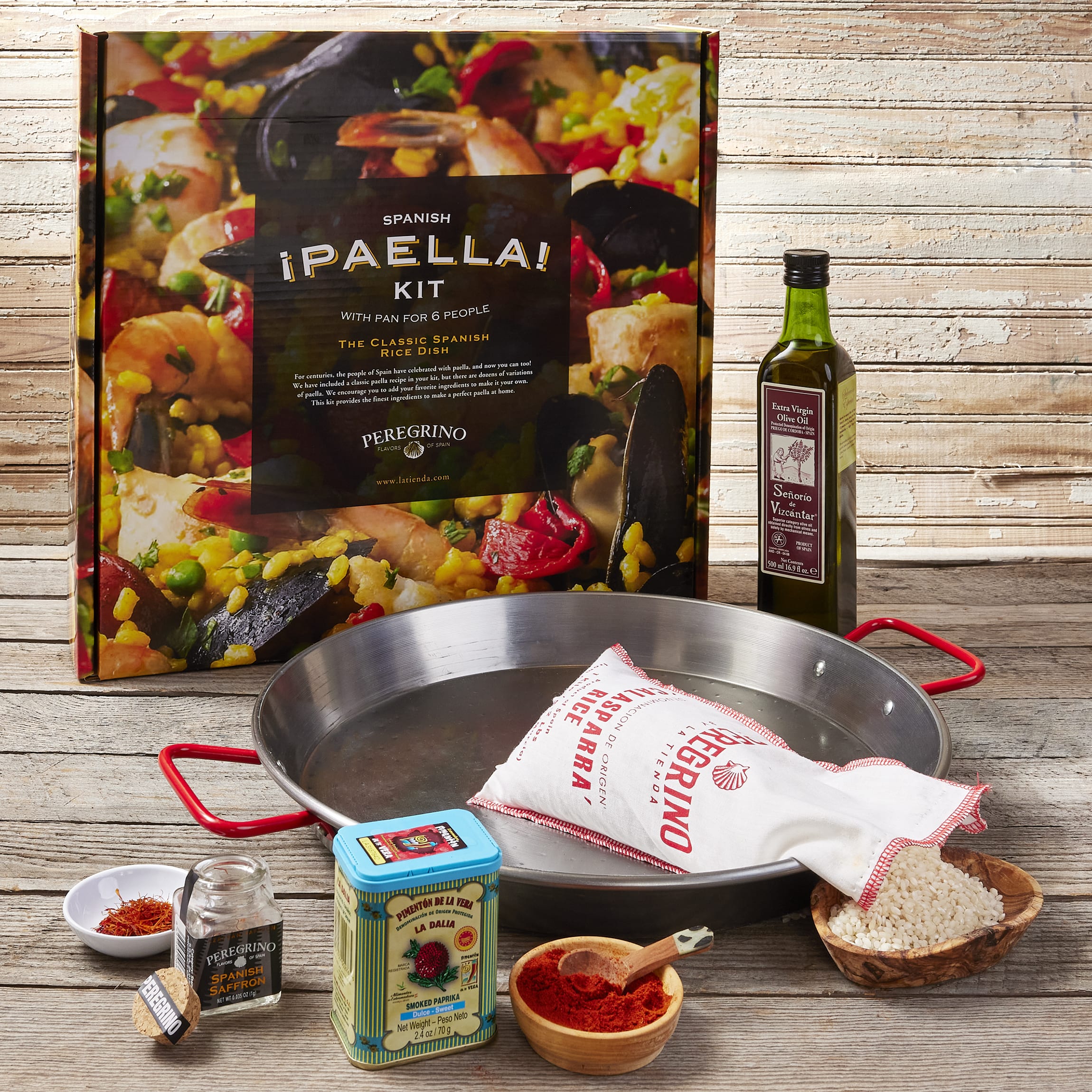
Finally, cooking techniques, like rabbit grilled out on wood charcoal, basted with alioli, suckling pig oven roasted at 700F, and a paella that is unique in all the world: rice and broth 3 feet across and only 2 inches thick, cooked to perfection in open air; or a 12-egg tortilla Española, a massive omelet that has to be flipped over intact.

That said, I miss a few special treats (Catalan chapter):
Pa torrat amb tomaquet i pernil (that’s Catalan pan de payes toasted, rubbed with raw garlic, and a ripe tomato squeezed on top, with a slice of jamon serrano). Every meal should start this way.

Pollastre al ast (real wood fired rotisserie very young chicken constantly hand-basted with brandy, garlic, lemon and the drippings) Gallina de Mar, or Gallina de Tossa (a plump Mediterranean fish, baked in a reduction sauce of seafoods.)

A galaxy of baby critters: Rape (rospo/rockfish) tails a la plancha; pulpets (pulpitos, baby octopus) also a laplancha, sonsos and chanquetes, baby fish unfortunately caught in the net, so tiny they’re battered and fried with no further ado.

Wish list: If I had the flour from which they make Catalan “pa de pages” I would make my own Catalan country bread here.

Again Don, thanks for responding, and best regards to Jonathan, Tim and everyone you have on board at latienda.com. Best of luck for the next 15 years of on-line excellence.

donEsteban

Oprima aqui para leer en espanol

La Tienda - Celebrating 15 YearsWhen our family founded La Tienda fifteen years ago, Ruth and I imagined we were putting together a cozy mom-and-pop business in our retirement so that we could work together with our sons while sharing our love for Spain. The first days of La Tienda began with our son Jonathan working in our basement every day, learning all about the new world of the Internet.

It was winter when we stacked our first inventory of jamón Serrano in our basement. I still recall loading a few hams at a time into my SUV, and driving to our local UPS package service for delivery to our customers. While waiting for the hams, our first customers requested other Spanish favorites, such as extra virgin olive oil, Manchego cheese, tins of bonito tuna, their favorite sauces and special paella rice. At our first ‘office’ over a dentist’s office, we stored all of these items on shelves we fashioned from 2×8 planks resting on cement blocks!

As La Tienda began to grow, our son Tim was able to join us full time. He brought invaluable experience about Internet commerce he had gained from three years running his own dot-com. The two brothers and I are still working together every day.

Today we have a climate controlled warehouse where all of the great products from Spain are kept in optimal condition. We send out hundreds of orders every day to homes across the country. The 2×8 shelves and the hams stashed in the garage are now an amusing memory.

How did this amazing story unfold?

I see two factors that closely intersect. First is that for years, I fostered our family’s appreciation of all aspects of the people and their way of life in all corners of Spain. Second, with the advent of the Internet, our deep knowledge and enthusiasm for Spain and her food could be widely shared.

Ruth and I have been involved in Spain and her culture for most of our married lives. It began when, as a newlywed Navy chaplain, I discovered the people of Spain on my first Med Cruise in 1965. Over the years Ruth and I, and later our family, have enjoyed meeting hundreds of farmers and craftsmen who take pride in making things the traditional way. What a joy it is to meet them personally, and to break bread together.

However, we have not just been travelers. Our youngest son, Christopher, was born in 1975 when we lived in El Puerto de Santa María, next to the naval base at Rota. At the time, his older brother Tim was attending El Centro Inglés, a Spanish/English primary school. Later Tim returned to Spain to spend a summer with a Spanish household in Sevilla. Their brother Jonathan spent two months between college semesters walking the 400-mile Camino de Santiago pilgrimage route – all the way from France, and returned there on his honeymoon. Chris returned to spend a summer in La Coruña.

Our enjoyment of Spain continues to grow. It is amazing to think that few people, even those who live in Spain, have visited more areas of Spain than we have. However, none of what we have accomplished could have happened without the advent of the computer and the emerging technology of the Internet.

Jonathan, Don and Tim Harris
In 1968, I had a frustrating experience, which drove home to me the value of the computer, which was just then coming on the scene. I was a young Navy chaplain stationed at the Coast Guard boot camp in Alameda, and needed to understand the emerging youth culture of the San Francisco Bay area. Therefore, I asked the recruits – what better resource – to provide a confidential account of their personal behavior and values.

It was invaluable material, but regrettably, there was no mainframe computer capable of analyzing the data. I had to wait for several years before I could deliver my stacks of keypunch IBM computer cards to UNIVAC, one of the first computers at Stanford University!

Entering the world of Internet commerce was a natural progression for our family. As Ruth and I raised our inquisitive boys, we always kept an eye on the computer culture. In 1984, we bought our sons, Tim, Jonathan and Chris, a Coleco ADAM Commander computer. It operated on a tape drive with 64K RAM, and had a dot matrix printer. It came along with a $500 college scholarship, which never came to fruition since the company was bankrupt within a couple of years.

Many of you may remember the early days of computers with dial-up connections, 8″, 5.5″ and 3″ floppy discs; freezing screens; annoying multiple crashes. It was the summer of 1995 when Microsoft launched Windows 95 and Internet Explorer to navigate the World Wide Web. In 1995, Amazon sold its first book on the ‘worldwide bookstore.’ A little over a year later, in 1996, our family launched LaTienda.com.

When we got together as a family to launch La Tienda, our eldest son Tim, who majored in Latin American Affairs, was employed by a classic ham company in Smithfield, Virginia. Our second son Jonathan was a sculptor fresh out of college, and their younger brother Chris was finishing his degree, with a minor in Spanish. All three of them graduated from The College of William & Mary.

Upon my retirement in 1988 we moved to Williamsburg, Virginia, perhaps the town with the most English ambiance in America. To make our new home our own, we embellished it with many fond mementos of Spain. Among our elaborate renovations, we decided to install classic Andalucian tiles in the bathrooms, kitchen, dining room and our fireplace surround.

As you might imagine, we found it a challenge to locate any authentic Alhambra design azulejos in the United States. When we finally did find a source, we filled our house with such beauty that we wanted to share our good fortune with others in America who had the same appreciation for Moorish tiles.

The challenge was that these Spain enthusiasts were not concentrated in any one area, but rather scattered over the continent. The timing was perfect: through the new technology known as ‘The Internet,’ we could get out the word to everyone instantly. LaTienda.com was born.

Jonathan taught himself web design, and arranged the display of Andalucian tiles in an attractive format for our LaTienda.com website. One day his brother Tim came home from his job at the country ham producer in Smithfield with a brilliant idea. It was prompted by the experience he had serving as an interpreter for a Spanish Serrano ham producer who was visiting the plant.

Jonathan, Don and Tim Harris
His idea was to have his brother post a picture of a jamón Serrano next to the rows of tiles, with a question: “If we could find these jamones would you want one?” What a question to ask a group of people who were predisposed to the Spanish culture! Within days we were receiving enthusiastic messages from across the country, and it became clear that azulejos may be one thing but jamón was quite another. We were on our way.

Next, we needed to encourage a Spanish producer to bring jamón Serrano to America. So we spent the next Christmas season over in Spain on a quest to identify a receptive company. It all worked out amazingly well, and by the end of 1997, LaTienda.com delivered the very first jamón Serrano to an Internet customer in America.

While our potential customers were eagerly awaiting news of jamón Serrano in America, they also asked if we could get their favorite Spanish products for them – ranging from Cola Cao and Nenuco, which brought back memories of their childhood, to aged Manchego cheese and bacalao salt cod. We have been adding products ever since – we are up to nearly 1,000 at last count. I have always kept our customers posted with a monthly newsletter – the predecessor of this note I am writing to you today!

Ruth and I are very grateful for our family, most of all. In addition, it is satisfying to see how our small dream has turned out to bring both joy to our customers and encouragement to several hundred families in Spain. We are also proud to have helped to introduce the idea of Spain to America along with other trailblazers such as chef José Andrés.

We are humbled that our small mom-and-pop business has grown into the largest purveyor of Spanish food in America. By staying true to our values, we strive to help preserve a way of life in Spain, which is unencumbered by the demands of the mass-market. We support our friends in Spain so that they may continue to make their traditional wholesome products. It continues to be a wonderful journey and we thank you for your support.

Su amigo,

Don

Celebrating 15 YearsCuando nuestra familia fundó La Tienda hace ya quince años, Ruth y yo pensamos que, tras la jubilación, estábamos creando una pequeña empresa en la que poder trabajar junto a nuestros hijos y con la que de alguna manera compartir nuestro amor por España. Los primeros días de La Tienda se desarrollaron con Jonathan en el sótano a diario, aprendiendo sobre el nuevo mundo de internet.

Era invierno cuando empezamos a apilar los primeros jamones serranos en nuestro garaje. Aún recuerdo cargar en mi vehículo unos cuantos jamones a la vez para llevarlos al servicio local de mensajería de UPS y enviarlos a nuestros clientes. Mientras estábamos a la espera de jamones, nuestros primeros clientes iban solicitando otras delicias españolas como aceite de oliva virgen extra, queso manchego, conservas de bonito, algunas de sus salsas preferidas y arroz especial para paella. En nuestra primera ‘oficina’ en el piso superior de la consulta de un dentista, almacenamos todos estos productos en improvisados estantes de tableros de 2×8 sobre bloques de cemento.

Una vez que La Tienda comenzó a crecer, nuestro hijo Tim pudo unirse a nosotros a horario completo. Aportó su gran experiencia en comercio a través de internet que había adquirido durante los tres años en los que dirigió su propio dot.com. Los dos hermanos y yo continuamos trabajando día a día.

Hoy en día contamos con un almacén climatizado en donde todos los productos provenientes de España se almacenan en óptimas condiciones. Cada día enviamos cientos de pedidos a hogares repartidos por todo el país. Los estantes de 2×8 y los jamones apilados en el garaje son sólo un divertido recuerdo.

¿Cómo se desarrolló esta maravillosa historia?

Existen dos factores íntimamente relacionados. El primero es que desde hace muchos años he fomentado en mi familia la estima por la idiosincrasia española y por su diversidad de formas de vida. El segundo es que con la llegada de internet, nuestro profundo conocimiento y entusiasmo por España y su gastronomía podían ser extendidos de una forma más amplia.

Ruth y yo hemos estado implicados en la cultura española la mayor parte de nuestra vida de casados. Todo comenzó en 1965 cuando recién casado y siendo ya capellán de la Armada, descubrí a la gente de España en mi primer destino en aguas del Mediterráneo. A lo largo de los años Ruth yo, y luego nuestra familia, hemos disfrutado conociendo a cientos de esmerados labradores y artesanos que elaboran sus productos a la manera tradicional. Es todo un placer conocerlos personalmente y partir el pan junto a ellos.

Sin embargo, no hemos sido exclusivamente viajeros. Nuestro hijo Christopher nació en 1975 mientras vivíamos en El Puerto de Santa María, ciudad cercana a la base naval de Rota. En aquellos tiempos, su hermano mayor Tim asistía a El Centro Inglés, un colegio bilingüe de Primaria. Años más tarde Tim regresó a España para pasar el verano en un hogar sevillano. Su hermano Jonathan pasó dos meses de vacaciones peregrinando los 1.000 kilómetros del Camino de Santiago desde Francia y a él volvió en su luna de miel. También Chris retornó para pasar un verano en La Coruña.

Nuestro amor por España continúa creciendo. Es sorprendente pensar que es poca la gente que, incluso viviendo en España, haya visitado más de sus regiones que nosotros. No obstante, nada de lo que hemos conseguido podría haberse hecho realidad de no haber sido por la llegada de los ordenadores y la pujante tecnología de internet.
Jonathan, Don and Tim Harris
En 1968, viví una desalentadora experiencia que me hizo darme cuenta del valor de los ordenadores que, por entonces, acababan de entrar en escena. Yo era un joven capellán destinado en el campo de entrenamiento de Guarda Costas en Alameda y debía comprender la cultura juvenil emergente en el área de la Bahía de San Francisco. Así pues, les pedí a los reclutas-qué otra mejor fuente- que me proporcionaran un listado confidencial de sus conductas y valores personales.

Se trataba de un material de valor incalculable, pero desgraciadamente, no existía ningún marco informático capaz de analizar todos aquellos datos. ¡Tuve que esperar varios años antes de poder entregar mis montones de tarjetas perforadas de IBM a UNIVAC, uno de los primeros ordenadores de la Universidad de Standford!

La entrada en el mercado a través de internet fue progresión natural para nuestra familia. Mientras Ruth y yo criábamos a nuestros inquisitivos niños, nos mantuvimos siempre atentos a la cultura informática. En 1984 les compramos a nuestros hijos Tim, Jonathan y Chris un ordenador Coleco ADAM Commander. Funcionaba con una cinta magnética, 64K de RAM y tenía una impresora de matriz de puntos. Se vendía junto con una beca de 500 dólares para la universidad que nunca se hizo realidad puesto que la empresa quebró un par de años más tarde.

Muchos de ustedes recordarán los comienzos de los ordenadores con conexiones por línea conmutada, disquetes flexibles de 8, 5,5 y 3 pulgada, pantallas que se congelaban y molestos fallos de aplicaciones. Corría el verano de 1995 cuando Microsoft lanzó Windows 95 e Internet Explorer para navegar en la red. En 1995 Amazon vendió su primer libro en su “librería virtual.” Un poco más tarde, en 1996, nuestra familia lanzó www.tienda.com

Cuando nos reunimos como familia para lanzar La Tienda, nuestro hijo mayor, Tim, ya se había licenciado en Asuntos Latinoamericanos, y estaba empleado en una empresa jamonera de Smithfield en Virginia. Nuestro segundo hijo, Jonathan, era un escultor recién salido de la universidad, y su hermano menor, Chris, se encontraba terminando su licenciatura con especialidad secundaria en español – los tres cursaron sus estudios en William & Mary College.

Tras jubilarme en 1988, nos mudamos a Williamsburg, Virginia, que quizás sea la ciudad con el ambiente más inglés de todos los Estados Unidos. Para convertir la casa en nuestro nuevo hogar, la decoramos con muchos recuerdos de España. Entre los cambios que llevamos a cabo, decidimos colocar azulejos clásicos andaluces en los cuartos de baño, cocina, salón y contorno de la chimenea.

Como pueden imaginarse, se nos hizo complicado encontrar cualquier tipo de azulejo de auténtico diseño de la Alhambra en los Estados Unidos. Cuando por fin encontramos el suministro, llenamos la casa de tanta belleza que decidimos brindar esa fortuna a otros ciudadanos de Estados Unidos que compartieran nuestro aprecio por los azulejos moriscos.

Entonces se nos presentó un reto: estos entusiastas de la cultura española no se encontraban concentrados en ninguna zona en particular sino que, al contrario, se hallaban desperdigados por todo el continente. Aprovechamos la oportunidad del momento: a través de la tecnología conocida como ‘internet,’ podíamos hacernos visibles a todos de manera instantánea. Así nació LaTienda.com.
Jonathan, Don and Tim Harris
Jonathan se convirtió en un autodidacta y aprendió a diseñar páginas web y a presentar los azulejos andaluces en un atractivo formato para nuestro portal de LaTienda.com. Un día su hermano Tim volvió de su trabajo en la jamonera de Smithfield con una brillante idea que se le ocurrió tras servir de intérprete para un productor de jamón serrano español que visitaba la planta.

Su idea era añadir una fotografía de un jamón serrano a las de azulejos con una pregunta: “¿Le gustaría comprar uno de estos jamones si se los pudiéramos proporcionar?” ¡Era la pregunta que los entusiastas de la gastronomía española estaban esperando! En el espacio de unos días recibimos mensajes llenos de entusiasmo de diferentes puntos del país, y nos dimos cuenta que los azulejos eran buena idea pero el jamón era mucho mejor. Estábamos en el buen camino.

El siguiente paso era disuadir a un productor español para que exportara jamón serrano a América. Así que pasamos las siguientes Navidades en España buscando una empresa dispuesta. Todo funcionó de forma increíble y para finales de 1997 LaTienda.com entregó el primer jamón serrano a un cliente de América gracias a internet.

Mientras nuestros deseosos clientes esperaban noticias sobre el jamón serrano, también nos solicitaban sus productos españoles favoritos, desde Cola-Cao y Nenuco, que evocaban recuerdos de su niñez, hasta queso manchego viejo y bacalao. No hemos parado de añadir productos a la lista desde entonces – ahora ofrecemos alrededor de mil productos. A la vez, siempre me gustó mantener informados a nuestros clientes publicando un boletín mensual – ¡el predecesor de esta carta que ahora les escribo!

Ruth y yo damos gracias sobre todo por nuestra familia. Pero también es muy satisfactorio ver cómo nuestro pequeño sueño se ha revelado un deleite para nuestros clientes y un gran apoyo para varios cientos de familias en España. Nos satisface haber colaborado a introducir el concepto de España en América junto a otros pioneros de la idea como el chef José Andrés.

Agradecemos con humildad que nuestra pequeña empresa se haya convertido en el mayor proveedor de comida española de América. Permaneciendo fiel a nuestros valores, nos esforzamos por ayudar a conservar una forma de vida en España que se sustenta en gran parte gracias a la demanda del mercado de masas. Apoyamos a estos amigos españoles para que puedan continuar elaborando sus tradicionales productos naturales. Nuestro recorrido continúa siendo maravilloso y les agradecemos su apoyo.

Su amigo,

Don

Older Posts »